
What Western operators often misread about Gulf sports markets
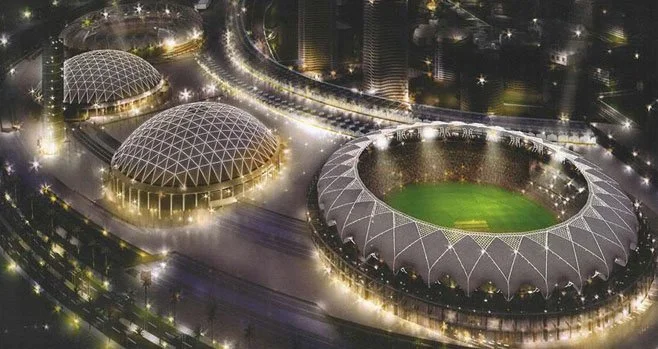
International sport organisations increasingly view the Gulf as a major growth market. The region now hosts Formula One races, global boxing cards, tennis tours and elite football competitions, supported by sustained government investment and long-term national policy. Yet many Western operators still approach it as a rapid commercial opportunity, when in practice it functions more like a relationship-led ecosystem.
Gulf states are using sport as part of economic diversification. Saudi Arabia’s national programme explicitly positions sport and quality-of-life industries as economic sectors under Vision 2030 (https://www.vision2030.gov.sa/en/programs/quality-of-life-program/). In the UAE, major events, tourism and infrastructure are coordinated through national development planning, including the UAE Tourism Strategy 2031 (https://u.ae/en/about-the-uae/strategies-initiatives-and-awards/strategies-plans-and-visions/tourism/uae-tourism-strategy-2031) and federal sports development policy (https://u.ae/en/about-the-uae/culture/sports-and-recreation). Governments are not simply hosting events; they are integrating sport into aviation, hospitality, real estate and inward investment.
This structure shapes how commercial decisions are made. Entry often involves multiple stakeholders across government entities, sovereign wealth funds and private partners. External assessments of the UAE economy note that major international sporting events are used to increase tourism, attract international business and strengthen global positioning (https://www.dfat.gov.au/geo/united-arab-emirates/united-arab-emirates-country-brief). As a result, partnerships tend to develop through sustained engagement rather than transactional deal cycles.
The commercial implication is clear. Organisations that expect quick access often interpret long timelines as hesitation. In reality, patience signals commitment. Repeated presence builds trust, and trust determines opportunity.
In Gulf sports markets, relationships operate as a commercial infrastructure. Success depends less on speed and more on credibility, consistency and alignment with the national development strategy.